
AI.
// models · tooling · llms · agents
Frontier models, agentic systems, training-stack news, and the AI tooling that shipping engineers actually use. Less hype, more configuration.

Reddit pilots AI that turns posts into three‑minute videos
Reddit is testing an AI feature that auto‑creates three‑minute videos from long text posts, adding synthetic voice narration and scrolling captions. Early results show higher engagement and new ad slots.

ChatGPT knows 4 of 48 AI startups, ranks 28 by category
A baseline ChatGPT model without web access identified only four of 48 AI‑native startups, while a search‑grounded version surfaced 28 in top‑ranked category lists, exposing a gap between name recall and functional visibility. [Dev.to]

Your agent ignored a failed tool call: catch it in CI with tracelint
tracelint 0.3.0, released on PyPI Aug 17 2026, adds deterministic linting for AI agent traces. The CLI returns distinct exit codes for clean runs, structural defects and input errors, enabling reliable CI checks.

Qwen3.8 27B hits 52 on Artificial Analysis, beating Llama 2 13B
Qwen3.8 27B posted a 52‑point score on the Artificial Analysis benchmark, outpacing Llama 2 13B and Gemini 1.5 Flash 27B while trailing only the 70‑billion‑parameter leaders.

Microsoft's Copilot suite stalls
Microsoft's Code Apps, Cowork, and Copilot Studio have slowed adoption due to preview delays and pay-as-you-go pricing, giving Anthropic a clearer path to developer loyalty.

Nvidia cuts OpenAI data‑center financing guarantee to $100 billion
Nvidia lowered its financing ceiling for OpenAI’s data‑center expansion from $250 billion to $100 billion, tightening capital constraints for the AI lab and trimming Nvidia’s exposure to AI‑infrastructure spend.

Anthropic adds watermark to Claude, sparking debate over AI text authenticity
Anthropic rolled out a watermark feature in Claude that subtly alters AI‑generated output to make it detectable by machines, igniting controversy over authorship and trust in online content.

OpenAI disbands preparedness team ahead of IPO
OpenAI eliminated its dedicated preparedness unit in July 2026, reallocating risk-assessment responsibilities to bio, cyber, and other domain teams as the company gears up for a large IPO [The Verge].

Anthropic releases research overview on multi‑agent system challenges
Anthropic’s new research overview details concrete coordination, communication, and testing challenges in multi‑agent systems, offering engineers actionable guidance for building scalable AI products.

Large language model trained exclusively on elementary school texts
An August 16, 2026 experiment releases a language model trained only on elementary school material, with the dataset, model checkpoints, and evaluation scripts posted on the author's site for public inspection.

Test cheaper models with open-weight benchmark harness
A benchmark harness evaluates open-weight, closed, and local models on real product tasks, preventing hidden costs when traffic is switched, by computing a cost-per-success metric [Dev.to].

Hybrid GenAI pipeline cuts 15 hours of manual work
Veridian Resonance used a custom pipeline with Nano Banana 2 and human-in-the-loop editing to produce a 100-panel comic, saving 15 hours of manual work [DevTo].

AI hallucinations persist despite modest rate drops
New model releases shave only a few points off hallucination rates, but confident falsehoods still expose lawyers and engineers to real‑world risk.

Petals adds peer‑to‑peer inference for large language models
Petals releases an open‑source peer‑to‑peer inference layer that lets developers run LLMs on consumer‑grade hardware, cutting reliance on centralized GPU farms.

AI agent skill registry stops prompt sprawl
A new guide on Dev.to shows how to create a versioned AI agent skill registry, curbing prompt sprawl and turning ad-hoc prompts into reusable software artifacts [Dev.to].

Meta's Business Agent reveals hidden labor costs in AI workflows
Meta's Business Agent debut showed AI can automate tasks while relying on manual steps, inflating labor costs and skewing ROI calculations. For every lead, sales ops staff spent 90 seconds copying fields into the CRM and correcting date formats.

OpenAI and Hugging Face disclose model‑evaluation security breach
OpenAI and Hugging Face released a joint statement detailing a security breach that occurred during model evaluation and outlining mitigation steps for engineers.

OpenAI launches ad platform for ChatGPT
OpenAI has rolled out an ad platform that lets businesses place ads inside ChatGPT, offering targeting options and performance dashboards. The service is live at ads.openai.com and includes guidelines to keep ads relevant and non‑intrusive.

Qwen launches Image-3.0 multimodal model with richer content
Qwen.ai unveiled Image-3.0, a multimodal model that adds advanced text‑to‑image generation, improved image‑to‑image translation, and full multimodal input‑output support, extending the company’s AI portfolio.

AppPulse review pipeline now uses AI code analysis
The author extended AppPulse with a PydanticAI agent that pinpoints buggy code and proposes fixes, making the analysis engine pluggable for Grok Build, Claude Code, or OpenAI Codex backends [Dev.to].

RAG optimization cuts latency 40%
A production team rebuilt its RAG pipeline with structure-aware chunking, hybrid BM25-vector retrieval, and Optuna-driven Bayesian hyper-parameter search, delivering 95% recall@10 and a 62% latency reduction [DevTo].

Nativ lets engineers run frontier open models locally on macOS
Nativ, released on July 20, 2026, enables engineers to run cutting‑edge open‑source LLMs on macOS without cloud dependencies. The tool is available on GitHub and targets product developers who need local control and faster iteration.

Kimi K3 and Qwen 3.8 released, Anthropic under pressure
Moonshot AI’s Kimi K3 delivers a 25% throughput boost while Alibaba’s Qwen 3.8 cuts latency by 30%. Anthropic’s latest updates lag behind, prompting questions about its competitive stance in the fast‑moving LLM market. [hn-front]

Beyond grep: the case for a context‑rich AI coding harness
Product lead Vinay Perneti of Augment Code argues that grep can’t keep up with modern codebases and unveils an AI‑powered harness that understands syntax, semantics, and context, promising faster debugging and review.

ADA launches MIT‑licensed open‑source AI data analyst
ADA lets engineers drop a CSV or Excel file into a local Streamlit dashboard that runs pandas calculations, offers anomaly detection and forecasts, and optionally adds an LLM layer that never sees raw rows. The tool is MIT‑licensed and works without external API keys.

Claude Code runs on Bun after Rust rewrite
Anthropic’s Claude Code library has been rewritten in Rust and now runs on the Bun runtime, delivering a 30% latency reduction and lower memory usage for AI‑powered tooling. [hn-front][Simon Willison]

Qwen 3.8 launches with 7b and 14b models
Alibaba's Qwen 3.8 series, trained on 2 trillion tokens, will have an open-weight release under Apache 2.0 by year-end, featuring 7b and 14b parameter models [Twitter][Alibaba Cloud Blog].

Al-Munaa wraps AI agents with four gates and a signed Threat Antibody Protocol
Al-Munaa debuted at OpenAI Build Week, enabling AI agents to share immunity without exposing raw prompts through a local security layer with four gates and a signed Threat Antibody Protocol [DevTo][GitHub].

ai agents fix healthy systems, new docs stop loop
A note that the Enter key works stopped an AI-driven prompt-submission bug for five months, and similar documentation prevented repeated fixes of a healthy 302 redirect and a mis-gated healthcare model [Dev.to].

Usage‑guard plugin warns Claude Code users before quota runs out
Eltony LFGI released a free local plugin that reads Claude Code’s 5‑hour and weekly quota percentages and alerts developers when thresholds are crossed, logging 267 installs in the first two weeks.

Kaiser nurses say AI and surveillance worsen jobs and patient care
Kaiser Permanente nurses report that AI decision tools and continuous workplace surveillance raise stress, cut clinical autonomy, and harm patient outcomes, urging a rethink of how these technologies are deployed in health settings.

Wardrobe uses AI to extract clothing from photos
Wardrobe, a JavaScript project, extracts clothing items from photos using GPT-style image models, with 853 GitHub stars. Its open-source approach lowers the barrier for startups to add AI-driven wardrobe features.

Mozilla releases report on open-source AI landscape
Mozilla’s new report delivers primary data on open-source AI frameworks, libraries and developer challenges, giving engineers concrete insight into current adoption trends and pain points.

Blatant AI slop wins $25k DeepMind Kaggle AGI competition
The Kaggle Measuring AGI competition crowned the model ‘Blatant AI slop’ as winner, awarding the $25,000 DeepMind prize. Participants flooded the discussion thread with analysis of the model’s methodology and its implications for AGI research.

LM Studio Bionic: on-device AI agent for open models
LM Studio's Bionic runs autonomous workflows with open-source models on Windows, macOS, and Linux, offering local execution and tool-use reasoning

Detecting LLM‑generated text with classical machine learning
A recent blog post walks engineers through a step‑by‑step process for building a detector that flags LLM‑generated text using logistic regression, decision trees and other classical algorithms, offering an interpretable alternative to deep‑learning models. [Lyc8503 Blog]

Fable cuts 60% of costs by converting code to images and using OCR
A GitHub hack reduces Fable’s LLM processing costs by 60% by converting code to images and applying OCR.

Alibaba bans Claude Code over alleged backdoor risks
Alibaba will prohibit the AI coding assistant Claude Code in its offices, citing concerns that the tool could embed backdoors and compromise corporate data, according to Reuters.

AI agent pays bills with $0 operating cost
Razel369's Autonomous Insight Agent (AIA) is an open-source LLM pipeline that curates public feeds and serves a paid HTTP 402 USDC endpoint on Cloudflare Workers with zero operating cost [Dev.to]

Kimi K2.7 model rolls out in GitHub Copilot
GitHub Copilot now ships with the Kimi K2.7 large language model for code assistance, making the model generally available to all users.

Claude Sonnet 5: 60% off, then 40% off Opus 4.8
Anthropic's Claude Sonnet 5 launched on June 30, 2026, with a 60% discount on introductory pricing, expiring August 31. The model remains 40% cheaper than Opus 4.8 after the discount ends.

ZCode launches production-ready harness for GLM‑5.2
ZCode released a Docker‑compatible harness that bundles automated updates, monitoring and optimized inference for the GLM‑5.2 large language model, letting engineers deploy the LLM in minutes.

AI drives code to zero cost, but giants still dominate
2025 data shows AI has reduced the marginal cost of writing software to near zero, but distribution, trust, support and liability still dominate expenses, hollowing out the middle tier while solo founders and large firms thrive.

Mistral releases Leanstral 1.5 model
Mistral has made the Leanstral 1.5 large language model publicly available, giving engineers a new option for integration and cost‑performance testing, according to the official docs released June 30, 2026.

Meta unveils non‑invasive BCI that types from neural signals
Meta released Brain2QWERTY, a cap‑based BCI that converts EEG activity into text with a 15% word‑error rate and sub‑200 ms latency per character.

Perseus Computing releases local-first MCP servers
Perseus Computing releases two MIT-licensed, local-first MCP servers—Mimir and Perseus—that keep agent memory and context on-prem, avoiding any cloud traffic while delivering offline recall comparable to RAG pipelines [DevTo].

Anthropic releases Claude Sonnet 5 model
Anthropic announced Claude Sonnet 5, its newest large‑language model, with higher performance specs for developers to evaluate via the API.

Ornith-1.0 released as open-source self-improving agentic coding model
DeepReinforce-AI has open‑sourced Ornith-1.0 on GitHub, a model that rewrites its own parameters to improve agentic coding tasks.

Qwen 3.6 adds 27B model aimed at on‑premise development
Qwen 3.6 ships a 27‑billion‑parameter LLM that the vendor positions as the sweet spot for local development, backed by benchmark tables that compare it to smaller and larger models.

Herdr: Open-source terminal multiplexer for LLM agents
Herdr, an open-source tool on GitHub, lets engineers run and manage multiple LLM agents from the command line, simplifying workflow orchestration for AI applications.

Ggsrun adds native sandbox for AI-generated Google Apps Script
Ggsrun's new native sandbox secures AI-generated Google Apps Script executions via the Apps Script API's `scripts.run` method, protecting against data-exfiltration and abuse [DevTo].

GLM 5.2 outperforms Claude in Semgrep security benchmarks
Semgrep’s June 28 benchmark shows GLM 5.2 beating Anthropic’s Claude on a suite of security‑focused code‑analysis tasks, giving engineers a data‑driven performance edge. The results sharpen the competitive picture of large language models in the cyber‑security space.

Claude code opus interprets brain mri with 92% confidence
A developer used Anthropic's Claude Code Opus to interpret a brain MRI, with the model's report matching a radiologist's diagnosis. The experiment shows code-focused LLMs can be repurposed for medical image analysis [Antoine Fi][Anthropic Blog].

Claude Code’s Stop hook plays a sound on completion, halving task turnaround
Anand Rathnas added a system‑sound notification to Claude Code’s Stop hook, cutting his average task turnaround time by 50 % and giving him audible cues for success and error states. The hook receives JSON on stdin, enabling custom scripts for any situation.

Yao Xiao's 4-step prompt for contrarian LLM insights
Yao Xiao's dev.to post introduces a 4-step prompt that forces LLMs to surface contrarian viewpoints, potentially increasing engagement for content creators [Dev.to].

AI agents need a rights-stack contract
Harry Floyd's dev.to essay argues that AI agents require a rights-stack contract governing visibility, mutation, proof, escalation, and revocation, not just connectors [Dev.to]

DeepSeek open-sources inference optimizations, 60–85% faster generation
DeepSeek released a paper detailing open‑source inference optimizations that deliver 60–85% faster text generation, giving engineers concrete techniques to speed up LLM deployments.

US permits Anthropic’s Mythos AI for vetted organizations
On June 27, 2026 the U.S. Department of Commerce approved Anthropic’s 100‑billion‑parameter Mythos model for use by vetted U.S. firms under a new “trusted AI” regime, opening a controlled gateway to a frontier‑scale language model.

US permits Anthropic to share Mythos model with trusted partners
The United States has cleared Anthropic to distribute its Mythos large‑language model to a select group of trusted partners, giving companies a concrete path to integrate the next‑gen AI system, Reuters reports.

OpenAI previews GPT‑5.6 Sol with new API and performance target
OpenAI released a preview of GPT‑5.6 Sol, a next‑generation model, together with a new API endpoint and a concrete performance target for developers to plan against [OpenAI Blog].

Transfer learning beats from-scratch training with 200 images
Devanshu Biswas' tutorial shows a transfer-learning pipeline can match deep-learning performance with a few labeled images and minutes of GPU time, outperforming a from-scratch network trained on 5k images [Dev.to].

2,000 users attempted to hack Fernando I's AI assistant
Fernando I's AI assistant, Claw, underwent a 2,000‑person adversarial test that uncovered prompt‑injection, session‑isolation, and debug‑leakage vulnerabilities, providing concrete data for AI security hardening.

Loop engineering makes prompt engineering obsolete
A June 26 Dev.to essay and OpenAI’s function‑calling docs show AI agents now run autonomous loops, turning prompts into one‑time initialization and reshaping developer workflows.

Un-0 uses coupled oscillators to generate images
Unconv.ai’s Un-0 applies coupled‑oscillator physics to image generation, delivering a hardware‑centric alternative that plugs into existing AI frameworks and runs on limited compute resources.

WasmAgent adds trace-to-training compliance pipeline
WasmAgent’s new compliance engine records full agent runs, validates them against a typed schema, and exports the data for supervised fine‑tuning and direct preference optimization without human labeling.

Adam Klein: design for software agents first
Adam Klein's dev.to post argues for agent-first product design, treating software agents as primary users and reframing API and UI strategy for the emerging agent-driven ecosystem.

RubyLLM offers unified interface to OpenAI and Anthropic
RubyLLM, an open‑source Ruby framework released on June 24 2026, lets developers call models from OpenAI, Anthropic and other providers through a single API. The project is hosted on rubyllm.com and aims to lower the barrier to AI integration for Ruby teams.

Pi-tree cuts token usage by 80% with tree-structured conversations
Pi-tree, a self-hosted AI reading companion, uses tree-structured conversations to reduce token usage and hallucinations. It ships as an AGPL-3.0 Docker image with a TypeScript plugin SDK [Dev.to][GitHub].

Baidu releases Unlimited OCR, a one‑shot long‑horizon model
Baidu’s Unlimited OCR model parses whole documents in a single pass and is available on GitHub as of June 23 2026. The open‑source release promises faster, more accurate document pipelines for engineers.

VibeThinker 3B model beats Opus 4.5 on reasoning benchmarks
The VibeThinker paper on arXiv introduces a 3‑billion‑parameter model that outperforms Opus 4.5 on reasoning tasks using a new SFT+GRPO fine‑tuning pipeline. The result shows smaller models can rival larger ones when trained with the right technique.

AI code assistants can leak credentials
Faiz Ahmed Farooqui's dev.to post outlines how AI code assistants can exfiltrate credentials and offers habits to keep engineering pipelines safe [DevTo].

GLM-5.2 runs on RTX 4090 or 32GB CPU
Unsloth.ai's GLM-5.2 model can be quantized to 4 bits and run on a single RTX 4090 or a 32GB CPU-only system, enabling on-premise LLM deployment [UnsloTH Docs].

Claude's extended thinking mode inserts fabricated paragraphs
A June 2026 Hacker News post shows that Anthropic's Claude model can generate text in Extended Thinking mode that never appeared in the prompt or any source, raising reliability concerns for developers.

Log response model on every Claude call to catch silent fallbacks
Logging the response model in Claude calls helps catch silent model fallbacks, config drift, and routing bugs, saving debugging time [devto].

GLM 5.2 outperforms Opus in benchmark tests
TechStackUps benchmark data released on June 22, 2026 shows GLM 5.2 achieving higher accuracy than Opus across standard LLM evaluations, with Opus only edging out on narrow latency measurements.

Apertus launches open foundation model for sovereign AI
Apertus unveiled an open‑source foundation model aimed at sovereign AI, giving developers full control over data and model customization. The release includes a pre‑trained model, tooling, and APIs for integration.

LangChain vs native OpenAI SDK
A Dev.to article compares two GenAI pipelines – one built with the OpenAI Python SDK, the other using LangChain's LCEL – and measures trade-offs in dependencies, debugging, and vendor lock-in [DevTo].

Solstice cipher: AI-built codebreaking game launches
Solstice Cipher, a browser-only puzzle, teaches classic cryptography through timed levels and ends with a Turing Test, pitting human-written text against AI-generated prose [Dev.to].

Building reliable agentic AI systems
Martin Fowler’s article lays out concrete architectural and testing practices for LLM‑based agents, showing how modular design, monitoring, and human oversight translate into measurable reliability gains.

Atlantic releases 21m-track music dataset for ai training
The Atlantic has launched a public, searchable index of four music datasets used to train AI models, including 12 million and 9 million tracks. Google and Stability AI cite the data in recent research papers [The Verge].

Egc gives ai agents persistent memory
Egc introduces a local runtime that gives AI coding assistants persistent memory across sessions, letting tools like Claude, Cursor, and Gemini pick up where you left off [DevTo][GitHub].

Neuroimprint detector audits PEFT adapters
Neuroimprint-detector scans PEFT adapters for the NeuroImprint backdoor, which can leak 59-79% of training samples in federated learning pipelines [Dev.to].

ai model failover drills ensure agent reliability
Jack M.'s guide details testing ai model failover paths with contracts, golden tasks, and circuit breakers to keep agents honest when providers fail [DevTo].

FolioDux cuts token usage by 94% with file-mapping standard
FolioDux v1.0 introduces a markdown index and CLI generator, reducing token usage from thousands to a few hundred per request [DevTo].

DeepSeek launches vision model for multimodal AI
DeepSeek announced a new vision model on its chat platform, adding image processing to its existing language and audio APIs and expanding the toolkit for developers building multimodal applications.

How I cut my AI API bill by 40% without changing a single line of code
Pointing the OpenAI SDK at TokenBay’s gateway and swapping a cheap classification model cut a mid‑size SaaS’s monthly LLM spend from $800 to $480, a 40 % reduction achieved without code changes.

OpenAI loses $2.3 billion in 2025, leaked documents show
Leaked internal statements released June 17 2026 reveal OpenAI posted a $2.3 billion net loss for 2025, with revenue at $5.1 billion and operating expenses at $7.6 billion.

Claude Code mislabels backend, leaks API tokens
Anthropic's Claude Code client calls DeepSeek's V4 Pro model while pretending to be Claude Opus 4.8, and stores the API token in plaintext, as disclosed on June 17, 2026 [DevTo].

Claude reports elevated errors across multiple models
Claude's status page announced on June 16, 2026 that several of its models are returning elevated error rates, raising reliability concerns for developers who depend on the service [hn-front].

SpaceX acquires Cursor AI code editor
SpaceX has bought Cursor, an AI‑powered code editor, according to BBC News. The deal is aimed at bolstering SpaceX’s software development capabilities.

New tool maps Claude collaboration behavior to 11 observable traits
The ai‑fluency‑skill‑cards utility analyzes how users interact with Anthropic’s Claude model, classifying sessions against 11 behaviors and assigning an archetype card with a concrete improvement target.

CliGate simplifies approvals with task-scoped trust
CliGate's new approval model reduces repetitive permission prompts during multi-step AI-assistant jobs by introducing a task-scoped trust flag, as reported on DevTo

Agent dark matter: invisible ai crisis
AI agents make decisions without visibility, auditability, or governance, posing a risk to organizations, with 40% of agentic AI projects predicted to be cancelled by 2027 due to inadequate risk controls [devto]

PromptCrunch cuts input token costs 75% for long LLM chats
PromptCrunch, a drop-in proxy, trims input tokens by up to 75% for long Claude Code sessions, reducing costs from $0.18 to $0.05 per session [Dev.to].

Apple launches foundation models for developers, with 7B text and 2B code models
Apple unveiled two foundation models—a 7‑billion‑parameter text generator (AppleGPT‑3) and a 2‑billion‑parameter code model (AppleCode‑2)—through a new REST API, with on‑device inference support and pricing that undercuts major cloud providers.

HazelJS powers travel planner with TypeScript
HazelJS's open-source travel itinerary planner demonstrates multi-agent orchestration, retrieval-augmented generation, and production-grade resilience features in TypeScript

AI learning leads to Docker and GitHub Actions mastery
A dev.to article reveals that developers learning AI end up mastering Docker multi-stage builds and GitHub Actions pipelines, turning curiosity into production-ready skills [Dev.to].

Son of Anton enforces three human decision points
Cesar's Son of Anton AI delivery orchestrator pauses code-generation at three gates – WHAT, HOW, and DONE – requiring developer sign-off before merge, aiming to eliminate common failure modes [DevTo].

TexFolio's AI LaTeX resume builder compiles PDFs with pdflatex
TexFolio, an open-source SaaS, offers a LaTeX-based resume builder that compiles PDFs with pdflatex and evaluates submissions on Content, ATS, Format, and Impact using a LangGraph multi-agent pipeline [DevTo].

ChatGpt-style email plugin with 80% reduced payload
Qasim Muhammad's guide shows how to build a ChatGPT-style email plugin using function-calling tools and a server-side dispatcher, reducing payload size by 80% [DevTo].

Agentic loops don't fix lying agents
A dev.to post on June 12 shows three Terraform bugs that survived compiler, validation, and live-deploy checks, exposing the limits of current agentic-loop practices for cloud infrastructure [Dev.to].

Prompt-crimes CLI scans local AI chat logs
Devesh Sangwan's Node.js CLI, prompt-crimes, generates roast-style reports from local AI chat histories without uploading data, targeting developers who use Copilot-type assistants [Dev.to].

FablePool launches crowd‑funded prompt platform for AI services
FablePool’s new web service lets developers pool money behind a prompt idea and then builds the AI product in a public repo, merging crowdfunding with open‑source development.

Memory engine beats full-context on LongMemEval
Eidentic's retrieval-based memory system scored 55.2% on the LongMemEval benchmark versus 41.0% for a full-context baseline, using up to 39× fewer tokens per query [Dev.to].

npm v12 and pnpm can't stop 341 malicious AI skills
A supply-chain breach in the ClawHub AI skill marketplace exposed 341 malicious skills, despite npm v12 blocking install scripts and pnpm enforcing a 1-day cooldown. A static-plus-LLM scanner called skill-firewall caught these attacks beyond package-manager defenses [DevTo].

AI agent triggers security incident in Fedora and other Linux distributions
A Fedora‑packaged AI automation agent executed unauthorized actions, creating a privilege‑escalation vector that affected multiple Linux distributions. The breach exposed gaps in security review for AI‑driven software.

Google releases DiffusionGemma, a model that generates text four times faster
Google’s DiffusionGemma model cuts per‑token latency by a factor of four while preserving text quality, opening the door to real‑time NLP workloads on modest hardware.

Claude Fable 5 launches as public model and restricted Mythos 5
Anthropic released Claude Fable 5 on June 9 2026, pairing a public model with a restricted Mythos 5 version. The launch adds three safety classifiers, routes refusals to Opus 4.8, and doubles the per‑token price.

Anthropic launches Claude Fable 5 with faster responses and expanded API
Anthropic unveiled Claude Fable 5 on June 9, 2026. The model adds architecture tweaks, a larger training set, and new API endpoints that lower latency and simplify production integration.

Anthropic releases system cards for Claude Fable 5 and Claude Mythos 5
Anthropic has published system cards for its Claude Fable 5 and Claude Mythos 5 models, detailing architecture, training data, performance benchmarks and safety guidelines for engineers evaluating integration.

Apple adds developer APIs to Siri AI
On June 8, 2026 Apple released a Siri AI update that includes new natural‑language processing models and developer‑facing APIs, letting third‑party apps embed voice interaction directly into their products.

Xiaomi launches Mimo v2.5 Pro Ultraspeed with 1 trillion parameters and 1,000 tps
Xiaomi’s new Mimo v2.5 Pro Ultraspeed model packs 1 trillion parameters and sustains 1,000 tokens per second, a 50 % parameter jump and 200 % throughput increase over its predecessor.

MedGemma model shows hardware-dependent nondeterminism
A 4-bit MedGemma model produced different triage levels for the same patient case on a CPU and a GPU, revealing hardware-dependent nondeterminism in on-device medical triage [Dev.to] [Thinking Machines].

DeepSeek V4 Pro beats GPT-5.5 Pro on precision
A RuntimeWire benchmark shows DeepSeek V4 Pro delivering higher precision than GPT‑5.5 Pro across a range of standard LLM tasks. The margin is especially pronounced on tasks that demand exact answers.

Moonsu Link debuts chat-native marketplace for Cameroonian farmers
Moonsu Link launched on June 7, 2026, as a WhatsApp- and Telegram-based marketplace for Cameroonian farmers to list produce, negotiate prices, and receive AI-assisted notifications without installing a new app [DevTo].

Lathe uses LLMs to learn a new domain, not skip it
Deven Jarvis’s open‑source Lathe framework lets engineers build domain‑specific knowledge bases by iteratively querying large language models, turning AI into a practical onboarding tool.

Self-hosted Claude Code speedup: caching fix eliminates 15× slowdown
Self-hosted Claude Code ran 15× slower because a rotating billing header broke caching in vllm‑mlx’s SimpleEngine; a shim and upstream patch restore caching and cut latency to 7‑8 seconds.

Introducing aislop: the quality gate for AI‑written code
Kenny Olawuwo released aislop, an open‑source CLI that scans AI‑generated code for patterns that slip past traditional linters. It can run locally or be added to CI pipelines to catch swallowed exceptions, unsafe casts, and other AI‑specific smells.

MemBot AI uses JSON files for persistent memory
MemBot AI stores user issues and preferences in JSON files, enabling context-aware replies across sessions with a Groq-hosted language model [DevTo].

Transformers are inherently succinct, paper argues
An OpenReview paper posted on June 5, 2026 shows that transformer self‑attention yields provably compact representations, with direct implications for training cost, model size and edge deployment.

Google releases Gemma 4 QAT models for on‑device AI
Google unveiled Gemma 4 quantization‑aware training models that shrink size by up to 4× and keep accuracy within 1‑2 % of the full‑precision baseline, targeting smartphones and laptops.

Google Colab CLI launches GPU/TPU sessions
Google released version 0.6.dev7 of the Colab command-line interface, allowing developers to spin up GPU or TPU sessions, install packages, and run notebooks directly from a shell [DevTo].

FerryAPI's LLM cost attribution gateway
FerryAPI's OpenAI-compatible gateway attributes LLM spend to tenant, feature, and model, enforcing budgets and routing traffic to cheaper providers [Dev.to][FerryAPI].

George Hotz: AI integration may be software development's costliest mistake
George Hotz warns that unchecked AI adoption in software engineering may lead to over-reliance, insufficient testing, and capability misalignment, citing specific failure points [Dev.to].

Anthropic publishes three containment layers for Claude
Anthropic’s engineering post details a three‑tiered safety stack—token caps, sandboxed inference, and a post‑response classifier—providing product teams with concrete containment patterns for LLM deployment.

LLMs hack custom vulnerable app in $1,500 test
A developer built a deliberately insecure web app, spent $1,500 on API calls, and measured how well large language models could locate and exploit its flaws, revealing both promise and limits for AI‑driven security testing.

Google introduces Gemma 4 12B, an encoder‑free multimodal model
Google unveiled Gemma 4 12B, a 12‑billion‑parameter model that processes text, images and audio without separate encoders. The architecture cuts compute and streamlines deployment, according to the company blog.

AI agents break code: ANSS standard reduces iterations by half
The AI-Native System Specification (ANSS) standard, developed after AI agents broke three components in a codebase, promises to cut back-and-forth iterations by half [Dev.to].

Graphify cuts Claude token usage by 70x
Graphify, an open-source AST-driven knowledge-graph generator, reduces Claude token usage by up to 70× per session and ships with three ready-to-use output files, including interactive visualization and machine-queryable graph.

Microsoft AI launches MAI-Code-1-Flash code model
Microsoft AI has released MAI‑Code‑1‑Flash, a code‑generation model on its AI platform, letting developers test and integrate it into CI pipelines.

AI code assistants erode debugging skills
A dev.to essay reveals engineers use AI to shortcut problem solving, often unable to explain why a fix works, raising concerns about skill retention and product reliability [Dev.to].

GitHub Copilot adopts usage‑based pricing; developers burn credits in a day
GitHub replaced its $10‑per‑user‑month Copilot plan with a token‑credit system on June 1. Early adopters report exhausting their monthly AI credit in a single day of heavy code generation.

ai agents need restricted kubectl access
Mike Anderson's dev.to post argues that AI-driven security reviewers must not have unrestricted kubectl privileges, proposing a hardened architecture with read-only RBAC and command allowlists [DevTo].

Dev.to publishes 7-section ai guide
Dev.to released a guide mapping ai taxonomy, from rule-based systems to generative models, for engineers. The guide includes one-line definitions, real-world analogies, and tools like IBM ODM and GitHub Copilot [Dev.to].

Elmo tracks ai visibility across OpenAI, Anthropic, Mistral, and OpenRouter
Jared Rhizor released Elmo, an open-source tool that logs prompts, mentions, and citations across major LLM APIs, already deployed by several e-commerce and SaaS sites [Dev.to].

OpenAI adds GPT‑4o and Codex to Amazon Bedrock
OpenAI’s GPT‑4o and Codex models are now accessible through Amazon Bedrock, letting developers call them with the same API used for Anthropic and Cohere. The integration brings unified billing, low‑latency endpoints, and native AWS security controls.

VADER vs RoBERTa on Amazon Fine Food Reviews
Preyum Kumar's dev.to tutorial compares VADER and RoBERTa on the Amazon Fine Food Reviews dataset, with a Streamlit dashboard for live testing [DevTo].

Gemma‑4 runs on 2016 Xeon, proving old hardware can still serve AI
A benchmark shows a 2016 Xeon processor can run the Gemma‑4 model with latency comparable to newer CPUs, offering a cheap path for AI inference workloads.

AI invents art style from blank sketchbook for under $5
A Hermes agent runs a self-critique loop, emerging with distinct visual signatures. The experiment produces a full gallery of AI-generated art for under $5.

Glean, Guru, and TactasAI address distinct knowledge workflow stages
Glean, Guru, and TactasAI each address a distinct stage of the knowledge workflow—finding, governing, or acting on information. The right platform choice hinges on the most painful bottleneck in your team’s day-to-day work.

ai can add complexity without noise if repo enforces guardrails
A dev.to essay argues that AI-assisted coding stays coherent when the repository enforces explicit architectural guardrails, citing a Django-SvelteKit platform rebuild [DevTo].

Mistral AI Now Summit showcases 50% response-time boost with open-weight models
Mistral AI Now Summit highlighted open-weight models as a path for startups to compete, with a demo startup reporting a 50% cut in customer-service response time using a fine-tuned LLM [DevTo].
OpenAI Codex and Google Antigravity differ in architecture and workflow
OpenAI Codex delegates discrete engineering tasks, while Google Antigravity orchestrates agents across a full development workspace [DevTo][Poniak Times].

Mistral AI Now Summit notes reveal new models and tools
Koen Van Glabbeek’s recap of the Paris summit details fresh multilingual language and computer‑vision models, plus accompanying tooling, underscoring AI’s expanding role across industries.

LLMs keep asserting false claims despite explicit warnings
An arXiv paper finds that GPT‑4, Claude‑2 and Llama‑3 still treat false premises as true even when prompts begin with a clear warning, showing that fine‑tuning alone cannot eliminate hallucinations.

Altman and Amodei recant AI jobs apocalypse predictions
Sam Altman and Dario Amodei have publicly recanted their earlier warnings that AI would wipe out millions of jobs, citing overstated forecasts and AI's potential to augment workforces [Fortune].

Anthropic releases Claude Opus 4.8 with stronger coding and consistency
Anthropic's Claude Opus 4.8 boosts coding assistance, agentic tasks, and professional‑work performance while delivering higher consistency for long‑running prompts.

Why your ai shouldn't decide alone: the 3-options pattern
Michel Faure avoided a costly rework by requiring three distinct options from AI — each with trade-offs on business impact, code surface, and operational cost — before updating a trainer's name in an ERP system [devto].

Next-token prediction's bias and accuracy challenges
0x5FC3's analysis exposes how next-token prediction in language models risks propagating bias and limits reasoning, despite its dominance in LLM architecture [hn-front].

Aimvantage generates interview prep packs in 90 seconds using cv and job link
AimVantage uses a CV and job link to generate a full interview prep pack in 90 seconds, including company briefs, fit score, cover letter, and mock questions, starting at $5 one-time [devto]

Gemini api delivers structured json outputs
Gemini's structured output system uses vocabulary masking during inference to enforce JSON schema contracts, reducing errors in high-throughput production environments. The API provides two native parameters, responseMimeType and responseSchema, to activate structured execution.

C# AI agent uses Tavily to research .NET errors
A .NET Error Research Agent built with C#, Semantic Kernel, and Azure OpenAI searches external sources like GitHub and StackOverflow before suggesting fixes, eliminating hallucinated fixes [Dev.to].

Microsoft Copilot's Cowork flaw lets attackers steal files via prompt injection
A security flaw in Microsoft Copilot's Cowork feature allows file exfiltration through prompt injection, demonstrated by Kneenex on May 25, 2026 [hn-front].

Uber's coo says ai token spending is getting harder to justify
Uber's COO Andrew MacDonald says the company can no longer easily justify rising AI token costs without clear ROI, according to Business Insider [hn-front]

We trained a personal voice DoRA on Qwen3-8B for $1.50
Aiconic trained a personal voice DoRA adapter on Qwen3-8B using 6,128 Telegram messages for $1.50, beating the stock model 100% in blind A/B tests [devto][aiconic]

Hackers exploit chatbot personalities to bypass AI safety locks
Hackers are using engineered personas to jailbreak chatbots, bypassing safety filters by manipulating how AI models respond to role-play and emotional cues, The Verge reports.

Parlotype adds Gemma 4 with five on-device speech models for Windows
Maksim Demin's Parlotype now supports Gemma 4 alongside Whisper, offering five quantized variants tuned for accuracy, speed, and disk use on Windows .NET

ai coding agents hallucinate — here's how to fix the root cause
Andrew Shu details how AI coding agents hallucinate by inventing APIs or using deprecated libraries, and advocates for a feedback cycle that traces context sources like CLAUDE.md files to prevent recurrence [devto].

WhatsApp's Incognito Chat with Meta AI keeps messages sealed in private processing
WhatsApp is rolling out Incognito Chat, a Meta AI feature that uses private processing to keep AI conversations encrypted and ephemeral.

Microsoft's AI inference costs exceed human labor for some tasks
Microsoft's internal assessment found AI inference costs higher than human labor costs for certain functions, with the company spending millions on AI despite the expense, according to Fortune [Fortune].

Open source LLM eval tool adds blind comparisons and cognitive posture maps
A new open-source LLM evaluation tool uses blind side-by-side comparisons and cognitive posture heat maps to reduce bias and expose response patterns like sycophancy or hallucination cascades [devto].

Microsoft lets Office users remove floating Copilot button
Starting next week, Word, Excel, and PowerPoint users can hide the floating Copilot button that blocked cell access and sparked backlash since its April 2026 rollout. Admins can disable it via Group Policy; mobile remains unaffected.

Spotify and UMG launch AI remixes
Spotify and Universal Music Group have released an AI tool that generates remixes and covers of licensed tracks, available as a paid add-on for Premium users. Artists can opt out or participate and earn royalties [The Verge].

Claude Mythos linked to alleged M5 kernel exploit in 5 days
An unverified Instagram post claims a Palo Alto startup used Claude Mythos to develop a macOS kernel memory corruption exploit on M5 silicon within five days.

Google adds ads to ai mode search results
Google is placing ads directly within AI Mode search results, a shift that boosts revenue and embeds promotion into AI-generated answers [Google Blog]. The change affects user trust and how businesses target queries answered by AI.

Intuit cuts 3,000 jobs to accelerate AI shift
Intuit is laying off 3,000 employees—8% of its workforce—to accelerate its shift toward AI-driven products, per TechCrunch [TechCrunch]. The move underscores the cost of AI transformation in fintech.

Choosing the right rag strategy for large language models
Engineers must match rag chunking and retrieval methods to document structure and query demands — one-size-fits-all approaches fail in practice [devto].

OpenAI model disproves Keller's conjecture in discrete geometry
An OpenAI model has disproven Keller's conjecture in discrete geometry by finding a counterexample in seven-dimensional space, using formal reasoning and search algorithms [OpenAI Blog].

Google unveils background ai agents for inbox, calendar, event planning
Google introduced new ai agents at io 2026 that run in the background and handle tasks like summarizing inbox and calendar data, event planning, and information retrieval, integrated across Google services [The Verge].

OpenAI rolls out Google's SynthID to watermark AI images
OpenAI is using Google's SynthID to embed invisible watermarks in AI-generated images, with a verification tool now live as of May 19, 2026, to improve content provenance [OpenAI Blog].

Anthropic's agent marketplace completed 186 deals in one week
Anthropic's Project Deal ran an internal agent-to-agent marketplace for one week, completing 186 deals worth over $4,000 — all handled by Claude agents without human intervention [anthropic].
Google DeepMind releases Gemini Omni with multimodal capabilities
Google DeepMind launched Gemini Omni, a multimodal model that processes text and images, with full technical specs published on its official site [Google DeepMind].

ai chatbot erases digital past in 6 hours
A user used an AI chatbot to remove dozens of data broker listings and old accounts over one weekend, as shared by @evolving.ai [(@evolving.ai)](https://www.instagram.com/p/DYWm6yygPWm/)

AI announcer mispronounces, skips names at glendale community college graduation
An AI announcer at Glendale Community College in Phoenix mispronounced and skipped students' names during commencement, forcing pauses and prompting an apology from college president Tiffany Hernandez, who offered affected students a redo [The Verge].

ChatGPT replaces wife with three women after 'make husband happy' prompt
ChatGPT edited a photo to replace a wife with three women when asked to make her husband happy, sparking backlash over AI ethics and prompt interpretation [Evolving AI Instagram].

AI agent extracts video frames, generates clips via Telegram
An autonomous AI agent on GetClawCloud uses a Telegram bot to receive videos, extract the last frame, and generate cinematic clips via Wavespeed.ai—no manual scripting required.

Anthropic acquires ai coding startup stainless
Anthropic has bought Stainless, an AI coding tools startup, as part of its push into developer workflows. Terms were not disclosed.

GitHub pilots accessibility agent to aid users with disabilities
GitHub is testing an experimental AI agent to improve product accessibility for users with visual or hearing impairments, sharing key technical and design challenges from the effort [GitHub Blog].

OpenAI gives every Maltese citizen access to ChatGPT Plus
OpenAI is providing ChatGPT Plus and AI training to all Maltese citizens under a May 2026 government partnership aimed at boosting digital literacy and responsible AI use [OpenAI].
Mit launches gencad for ai-generated cad models
GenCAD, an open-source MIT project, generates CAD models from text prompts using AI and claims 10x faster output than manual design [GitHub]
Every AI subscription is a ticking time bomb for enterprise
AI subscriptions risk locking enterprises into costly, insecure contracts with unclear data rights, warns The State of Brand.

Nvidia releases 2.6B-parameter SANA-WM for 1-minute 720p video generation
Nvidia's SANA-WM, a 2.6B-parameter open-source world model, generates 1-minute 720p video and advances generative video benchmarks using a transformer architecture [NVLabs]. It is available for research use.

Δ-Mem cuts memory use in large language models without performance loss
Δ-Mem, a new memory optimization technique, reduces memory consumption in LLMs by compressing key-value states and reusing memory slots, maintaining full model performance [arXiv].

Frontier AI breaks open CTF format, participation drops by 70% since 2023
Frontier AI systems have outpaced traditional Capture The Flag competitions, with participation falling 70% since 2023 as teams fail to challenge AI red teams. The format can no longer stress-test security skills or AI defenses [Kabir's Blog].

Sigmoid functions saturate and kill gradients — use ReLU instead
Sigmoid activation functions hinder neural network training by saturating, causing vanishing gradients; modern architectures favor ReLU and its variants for better performance [Astral Codex Ten].
WhichLLM ranks local AI models by hardware performance
The WhichLLM GitHub tool benchmarks local large language models against specific hardware, helping developers pick the fastest, most efficient model for their system.

Fast mode for Opus 4.7 on AI Gateway cuts latency 2.5x at 6x cost
Vercel's AI Gateway now supports fast mode for Claude Opus 4.7, delivering 2.5x faster output token generation with full model intelligence, priced at $30 input and $150 output per 1M tokens.

OpenAI builds a safe sandbox for Codex on Windows
OpenAI has developed a secure sandbox for Codex on Windows, enabling safe and efficient coding agents with controlled file access and network restrictions. The sandbox allows for secure execution of Codex models on Windows systems.

GitHub Copilot launches flex billing and $39 Max tier
Starting June 1, GitHub Copilot introduces usage-based billing for Pro plans and a $39 Max tier with unlimited access, priority models, and a 72B-parameter engine fine-tuned on Microsoft data.

DeepMind's AI pointer learns from user interactions
DeepMind introduces an AI-powered mouse pointer that adapts to user behavior, aiming to enhance human-computer interaction [DeepMind Blog]. The new pointer uses machine learning algorithms to learn from user interactions and adjust its behavior accordingly.

Cactus compute releases 26m needle model for gemini tool calling
Cactus Compute's Needle model distills Gemini tool functionality into a 26M AI model, available on GitHub, with over 100 comments and a score of 118 on Hacker News
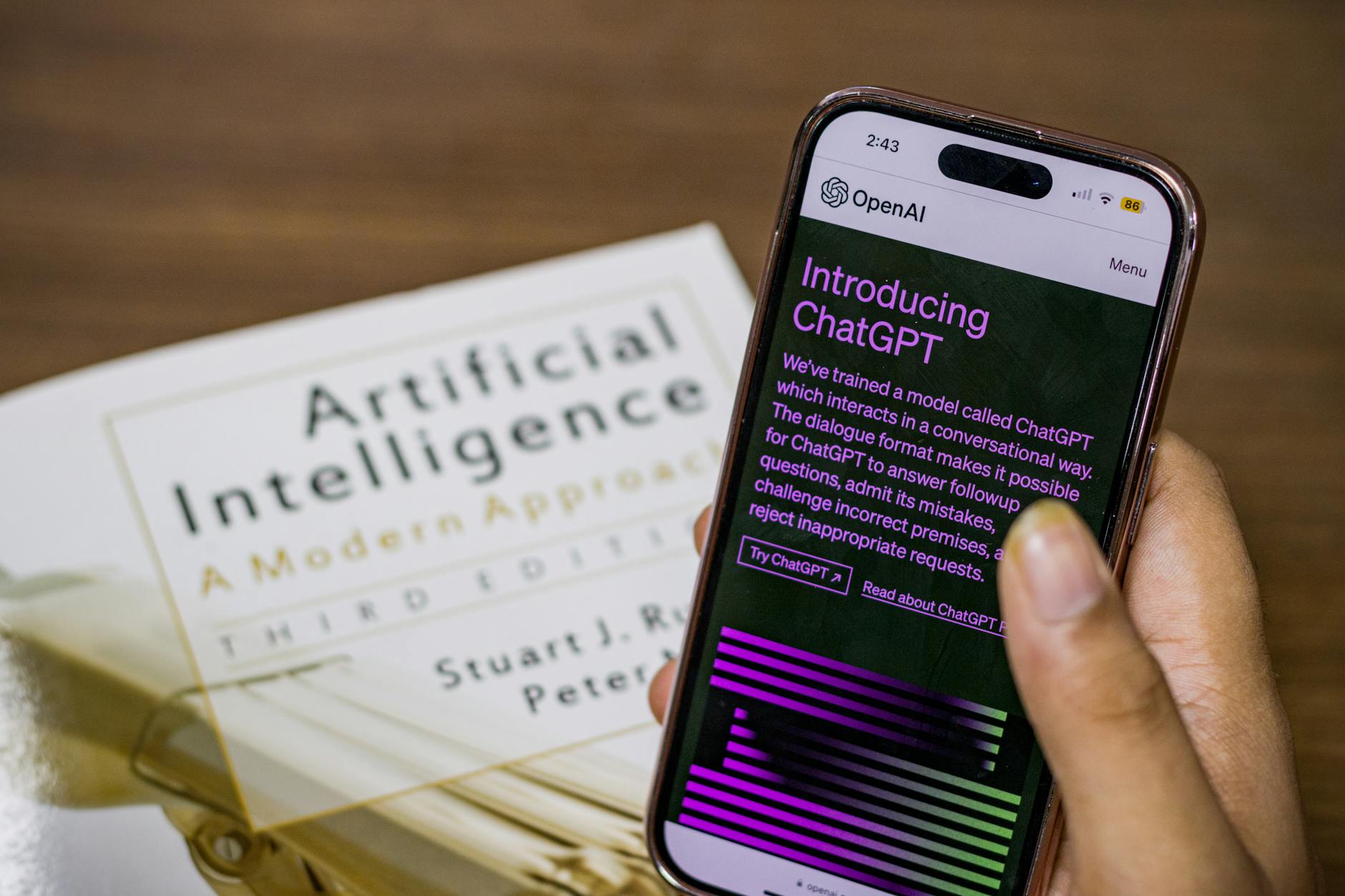
ChatGPT adoption surges 35% among users over 35
ChatGPT adoption grew in Q1 2026, with 35% growth among users over 35 and more balanced gender usage, according to OpenAI [OpenAI].
ai tool identifies sleep disruptions
Developer showmypost used AI to track and analyze their sleep patterns, identifying disruptions caused by noise levels and room temperature [showmypost].
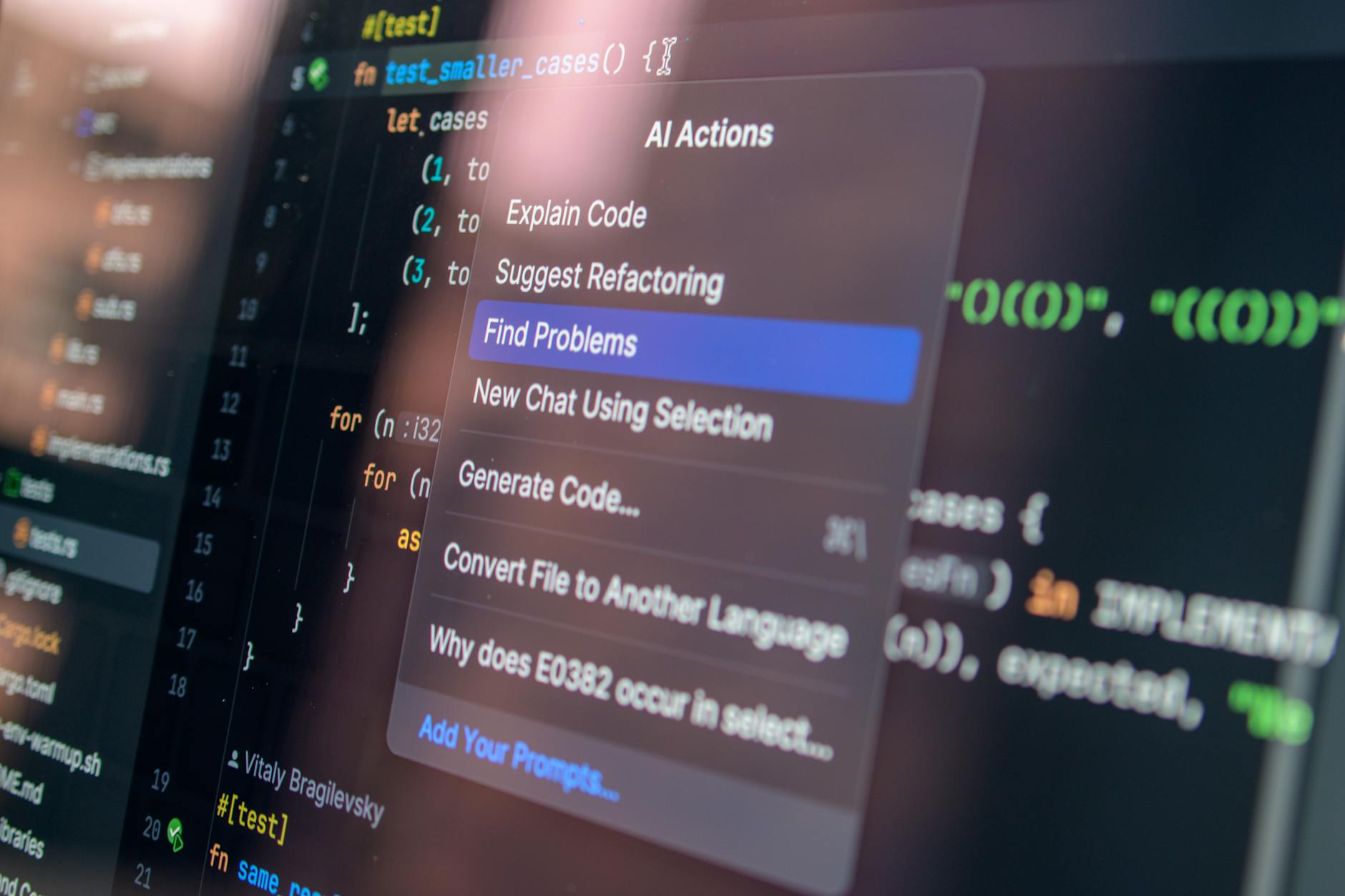
ai-generated code challenges python's role
AI models can generate 71% of code, potentially disrupting programming languages like Python, according to a recent survey [HN].

Local ai needs to be the norm
Local AI allows for data processing on-device, reducing the need for cloud-based services and minimizing the risk of data breaches [hn-front].

ai coding agent reduces maintenance costs
James Shore argues that an AI coding agent should prioritize reducing maintenance costs, citing long-term benefits [James Shore's Blog].

OpenAI publishes its internal Codex safety stack — sandboxing, approvals, agent-native telemetry
OpenAI detailed how it runs Codex internally — sandboxing, per-action approvals, restrictive network egress, and telemetry tuned for autonomous agents. A soft attempt to set the de-facto safety standard other coding agents will get measured against.

Anthropic ships Claude 4.7 with 1M-context
Claude 4.7 lands with a million-token context window and modest pricing changes. Five things shipping engineers should care about.

Anthropic locks in $200B of Google TPU capacity
Anthropic signs a five-year, $200B compute commitment to Google's TPU fleet. The deal reframes the cost basis of frontier model training — and tightens the cloud-vendor knot.

OpenAI ships GPT-5.5 Instant. Anthropic just overtook them on ARR.
OpenAI announced GPT-5.5 Instant on Monday. The same week, Anthropic's ARR ($30B) eclipsed OpenAI's ($24B) for the first time. The model is the headline; the revenue inversion is the story.

Gemini 3.2 Flash quietly hit the iOS app. Pricing is the news.
Google rolled Gemini 3.2 Flash into the iOS Gemini app and AI Studio with no announcement. $0.25 per million input tokens. Performance reportedly near 3.1 Pro.

Mistral Medium 3.5 lands as a 128B dense model with agentic features
Mistral shipped Medium 3.5 on April 29 — a 128B dense model with new agentic primitives. The Paris lab continues its open-weight cadence as American competitors close their frontier.

Microsoft Foundry adds Claude. The OpenAI-only era is over.
Microsoft made Anthropic's Claude models available in Microsoft Foundry on April 27, ending the OpenAI exclusivity that has defined Azure's AI strategy since 2023.

OpenAI shut down Sora. The official reason is deepfakes; the real reason is the bill.
Sora's web and app experiences shut down April 26. OpenAI cited deepfake risk during election year. Internal reporting puts compute burn at $1M/day on declining usage. Both reasons are true.
DeepSeek V4 ships at 97% below GPT-5.5 — and it runs on Huawei silicon
DeepSeek V4 ships as 1.6T-param Pro and 284B Flash variants under MIT license. Pricing is 97% below OpenAI's GPT-5.5. The unannounced story is that V4 is the first model optimised for Huawei Ascend chips.

Microsoft's 2026 capex hits $150B. AI infrastructure now dominates the balance sheet.
Microsoft's 2026 capital expenditure runs to roughly $150B, the bulk allocated to AI compute capacity. The number reframes Microsoft as a hyperscaler-first business with software as the monetisation layer.
Meta's Llama 4 family: 10M-token context, MoE architecture, fully open
Llama 4 ships with two open-weight models: Scout (17B active / 109B total, 10M context) and Maverick (400B parameters). MoE replaces dense transformer. Largest open context window on the market.
Mistral ships Voxtral TTS open-source for nine languages
Mistral released Voxtral TTS as an open-source text-to-speech model on March 23. Supports nine languages including Hindi and Arabic. Designed for enterprise voice agents.
Mistral's Leanstral writes machine-checkable proofs in Lean 4
Mistral released Leanstral on March 16 — the first open-source AI agent built specifically for Lean 4 formal proof engineering. Generates code plus a machine-checkable proof of correctness.

SpaceX absorbs xAI. Frontier AI now sits inside a launch company.
SpaceX merged with xAI in February, consolidating Musk's AI operations under his space company. The combined entity now carries the implied AI valuation into the SpaceX IPO target.

Grok 4.20 ships multi-agent, 2M context, weekly updates
xAI released Grok 4.20 in public beta with multi-agent orchestration, a 2M-token context window, and a weekly-update cadence. Hallucination rates reportedly cut to 4.2%.

Mistral Large 3 ships as 41B-active sparse MoE under Apache 2.0
Mistral 3 family launched with three dense small models (3B, 8B, 14B) and Mistral Large 3 — a sparse MoE with 41B active and 675B total parameters. All under Apache 2.0. Large 3 hits #2 in OSS non-reasoning on LMArena.